
The SCOUT model
Supporting Communities to Observe, Understand and Track wildlife.
Monitoring is the missing piece
Parks can only protect what they can count. In most of Africa that counting is done rarely, expensively and by outsiders. SCOUT puts it in the hands of the people who live beside the wildlife.
Uganda's own Strategic Action Plan for Large Carnivore Conservation names the lack of credible, long-term monitoring as one of five national threats, and calls for carnivore surveys every two years. Kidepo Valley shows why: an estimate of more than 100 lions in 2012 had fallen to around 23 by 2022, and the decline went unseen because no one was counting. SCOUT exists to do that counting.
How SCOUT works
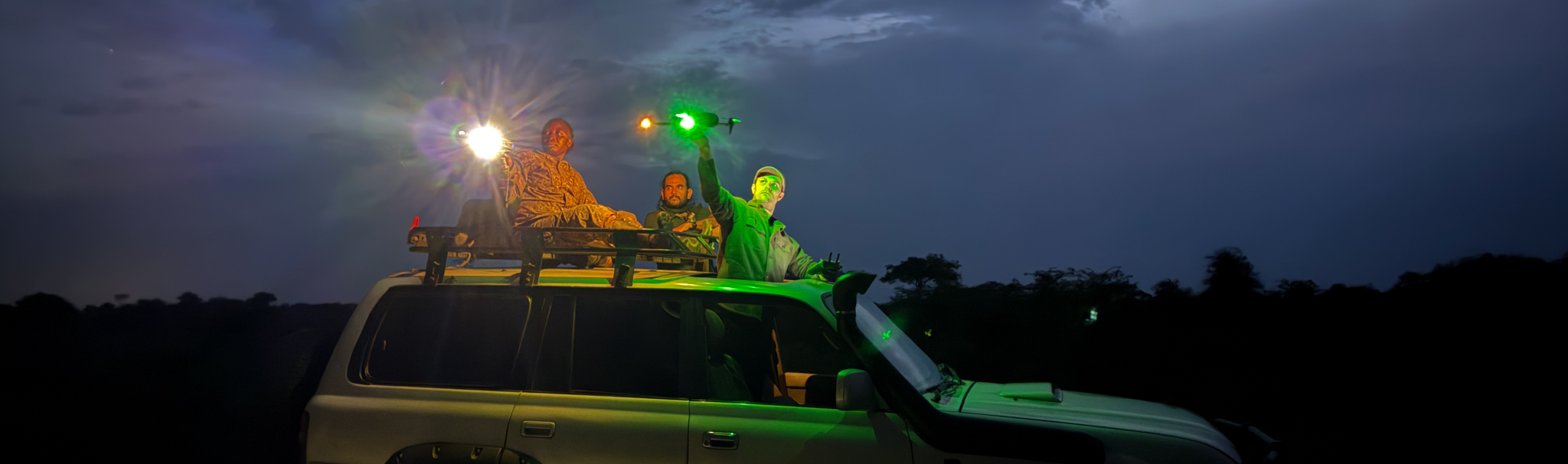
Community scouts are already the people on the ground in African conservation. SCOUT gives them the science. It is a four-step model that turns long-term wildlife monitoring, the piece most often missing from conservation, into local livelihoods and local expertise.
Expose



Communities living closest to threatened wildlife are brought into the science for the first time.
Train and employ


Participants get a livelihood and the training to run rigorous monitoring of lions, leopards, hyenas and shoebills.

Deliver

Data and a local voice go directly to government and protected-area managers.
Elevate

Participants present results, co-author papers and lead the next survey themselves.
One stream of locally led science feeds five outcomes
Long-term monitoring by local champions generates one continuous stream of evidence that supports multiple conservation outcomes.
SCOUT contributes to multiple UN Sustainable Development Goals: no poverty, quality education, decent work and economic growth, reduced inequalities, and life on land.
Partner with us to deploy SCOUT across six Ugandan sites by 2028.
Every funding tier is priced from what we have already delivered, not what we hope to.